AdSense can be a useful first monetization channel for a blog, but beginners often start in the wrong place. They worry about ad placement before they have enough useful pages, search traffic, or reader trust.
The better path is simple: build a site that people would use even if there were no ads. Then add monetization in a way that respects the reader and follows Google policies.
These beginner tips focus on durable revenue, not shortcuts.
What changed in 2026
Google's AdSense guidance and Search guidance both point in the same direction: unique content, useful experience, and policy-safe behavior. That means beginners should avoid thin AI posts, copied content, misleading ad placement, and low-quality traffic.
The rise of AI content also raises the quality bar. If every beginner can publish a generic article in minutes, the article that wins is the one with clearer examples, better structure, and stronger topical focus.
AdSense earnings usually improve when the site improves: more useful pages, better internal links, cleaner layout, and more qualified organic traffic.
The practical workflow
- Pick one niche where you can publish at least fifty useful articles over time.
- Create beginner guides, comparisons, troubleshooting posts, and question-led articles.
- Publish enough content before over-optimizing ad placement.
- Add AdSense only after the site has clear navigation, privacy policy, and useful page depth.
- Place ads where they are visible but not deceptive or overwhelming.
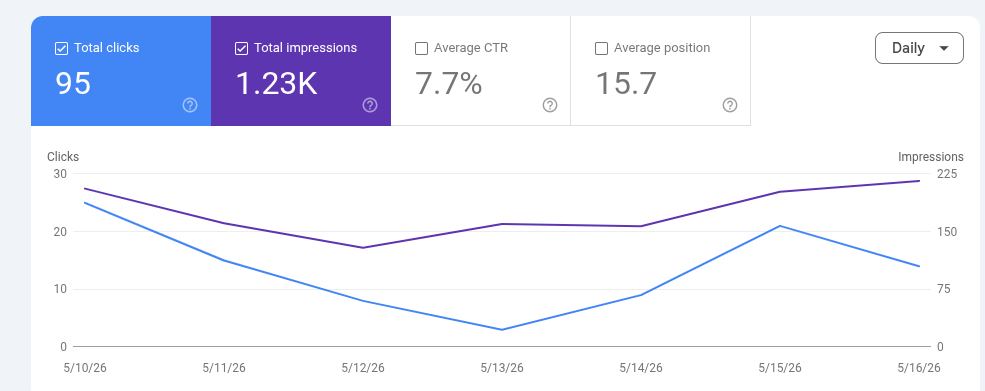
- Use Search Console and AdSense reports to identify pages worth improving.
What to avoid
- Do not encourage clicks or make ads look like buttons.
- Do not publish copied product descriptions or scraped summaries.
- Do not buy suspicious traffic to increase impressions.
- Do not cover restricted topics without checking policies.
- Do not create many near-identical posts just to grow page count.
How BlogHunter helps
BlogHunter helps beginners solve the publishing consistency problem. Instead of manually researching and uploading every post, you can use BlogHunter to generate SEO articles and publish them to a hosted blog or WordPress.
For AdSense, use BlogHunter to build real topic coverage: helpful guides, explainers, and comparisons that readers search for. Then improve important posts with examples and firsthand details.
That combination is more durable than chasing quick ad tricks.
Action checklist
- Your site has clear categories and navigation.
- Each article helps a real reader answer a real question.
- Your privacy policy and required pages are easy to find.
- Ads do not interfere with reading or navigation.
- Traffic comes from legitimate channels.
- You improve top pages instead of only publishing new ones.
Bottom line
Beginners should treat AdSense as a monetization layer, not a business model by itself. The real asset is the useful content library.
BlogHunter helps build that library faster while keeping the workflow focused on search-visible, reader-friendly articles.
Research basis: This article follows Google's public guidance on helpful, people-first content and scaled content abuse, Google AdSense policy guidance, the Google SEO starter guide, W3Techs CMS usage data, and Content Marketing Institute's 2026 B2B content marketing research.
- Google Search Central: helpful content
- Google Search Central: spam policies
- Google Search Central: SEO starter guide
- Google AdSense program policies
- W3Techs CMS usage statistics
- Content Marketing Institute: 2026 B2B content trends
Grow organic traffic on auto-pilot
BlogHunter researches keywords, writes SEO posts, and publishes to your site automatically. No writers. No CMS. No manual work.
Publish Now