AdSense success in 2026 is not about placing more ad units on every page. It is about building a site that deserves attention, keeps readers engaged, and gives advertisers clean inventory around useful content.
That matters because Google is clearer than ever about two related expectations: content should help people, and monetized pages should not feel like thin pages built only to trigger ads. A publisher can use automation, but the output still has to be useful, original, organized, and safe for readers.
This guide covers the AdSense work that actually matters: choosing the right content topics, building pages that earn search visibility, protecting traffic quality, and using BlogHunter to publish consistently without turning your site into a low-value content farm.
What changed in 2026
The biggest change is that monetization and content quality can no longer be treated as separate projects. Google AdSense guidance emphasizes unique content, a good user experience, and compliance with publisher policies. Google Search guidance emphasizes helpful, people-first content rather than pages created mainly to manipulate search rankings.
For publishers, that means the old playbook of short articles, heavy ads, and generic keyword targeting is risky. A better approach is to build clusters around real reader problems, answer those problems completely, and place ads in a way that supports the reading experience instead of interrupting it.
AdSense also depends on traffic quality. Buying low-quality traffic, encouraging ad clicks, hiding ads near misleading buttons, or using layouts that create accidental clicks can harm the account. The safest monetization strategy is still strong content and clean organic traffic.
The practical workflow
- Choose a narrow niche where readers have repeat questions and advertisers have commercial intent.
- Build a topic map with informational, comparison, troubleshooting, and buying-intent articles.
- Publish complete articles that answer one clear search intent instead of mixing five unrelated ideas on one page.
- Keep ad placements visible but respectful: avoid layouts where ads dominate the first screen or look like navigation.
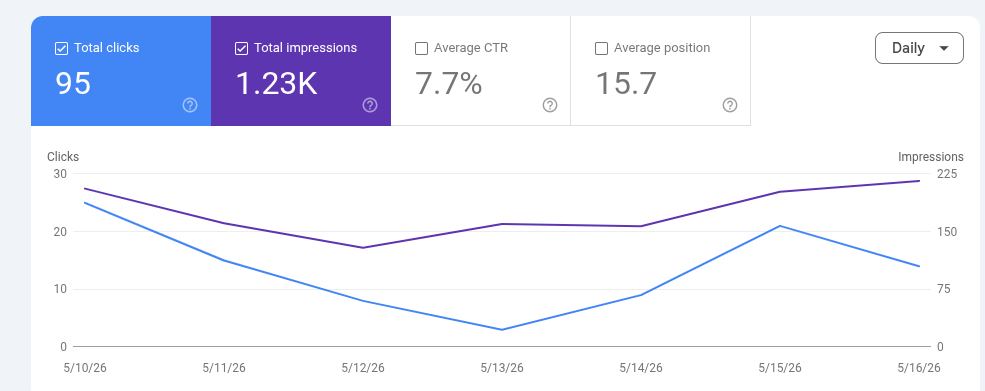
- Review Search Console and AdSense reports together so you know which topics bring valuable traffic and which pages need improvement.
- Refresh articles when facts, tools, policies, or examples change, instead of changing dates without improving the page.
What to avoid
- Do not publish scraped, rewritten, or barely edited content just to increase page count.
- Do not ask readers to click ads or design pages that cause accidental clicks.
- Do not create hundreds of near-identical pages that swap only the city, product, or keyword.
- Do not bury the answer below ads, popups, or unrelated introductions.
- Do not monetize pages that cover restricted topics without checking Google Publisher Restrictions.
How BlogHunter helps
BlogHunter is useful for AdSense publishers because it solves the consistency problem without forcing you to manage a manual content calendar. You enter the niche, BlogHunter researches keywords, writes SEO posts, and publishes them to your hosted blog or WordPress site.
The right way to use BlogHunter is not to flood the web with generic posts. Use it to build focused topic coverage: explainers, comparisons, how-to guides, and support articles that real readers would search for before buying, subscribing, or solving a problem.
For a publisher, the advantage is speed with structure. You can publish regularly while still reviewing important posts, improving examples, and keeping the site aligned with AdSense and Search quality expectations.
Action checklist
- Every article has one clear reader problem.
- The page gives useful information before the first major ad break.
- The title and H1 describe the actual page, not a clickbait promise.
- The article includes examples, steps, comparisons, or decisions the reader can use.
- Ad placements do not confuse readers or encourage accidental clicks.
- New posts support a larger topical cluster instead of random keyword chasing.
Bottom line
AdSense works best when it is layered on top of a useful publication, not when the publication exists only for AdSense. If you want to grow revenue in 2026, build a cleaner content system first.
BlogHunter helps with that foundation by turning keyword research, SEO writing, and publishing into one repeatable workflow. Better content coverage creates more search entry points, and better search entry points create a healthier path to monetization.
Research basis: This article follows Google's public guidance on helpful, people-first content and scaled content abuse, Google AdSense policy guidance, the Google SEO starter guide, W3Techs CMS usage data, and Content Marketing Institute's 2026 B2B content marketing research.
- Google Search Central: helpful content
- Google Search Central: spam policies
- Google Search Central: SEO starter guide
- Google AdSense program policies
- W3Techs CMS usage statistics
- Content Marketing Institute: 2026 B2B content trends
Grow organic traffic on auto-pilot
BlogHunter researches keywords, writes SEO posts, and publishes to your site automatically. No writers. No CMS. No manual work.
Publish Now