Why Blog Metrics Matter More Than Ever in 2026
In today's competitive digital landscape, understanding your blog's performance is crucial for success. With millions of content pieces published daily, knowing which blog metrics to track can mean the difference between content that resonates and content that gets lost in the noise. As we navigate through 2026, the importance of data-driven decision making has never been more critical for bloggers, content creators, and marketers.
Tracking the right metrics helps you understand what's working, what isn't, and where to focus your efforts for maximum impact. Whether you're a solo blogger or part of a content team, these simple blog metrics will provide valuable insights into your content's performance and audience engagement.
Traffic Metrics: Understanding Your Audience Reach
Total Page Views and Unique Visitors
The foundation of any blog analytics strategy starts with understanding how many people are visiting your site. In 2026, with the continued evolution of privacy-focused browsing and cookieless tracking, it's important to look at both total page views and unique visitors to get a complete picture of your audience reach.
Total page views tell you how many times your content has been loaded, while unique visitors show you the actual number of individual people who visited your site. This distinction is crucial because one person can generate multiple page views, especially if they find your content valuable and explore multiple articles.
Pro tip: Look for trends in your traffic patterns. Are certain days of the week more popular? Do specific topics drive more traffic? Understanding these patterns helps you optimize your publishing schedule and content strategy.
Traffic Sources Breakdown
Knowing where your traffic comes from is essential for understanding which channels are most effective for your blog. In 2026, the typical traffic sources include:
- Organic Search: Visitors finding you through search engines
- Direct Traffic: People typing your URL directly or using bookmarks
- Social Media: Traffic from platforms like Twitter, LinkedIn, and emerging networks
- Referral Traffic: Visitors coming from other websites linking to you
- Email Marketing: Subscribers clicking through from your newsletters
Each traffic source tells a different story about your content's performance. For instance, strong organic search traffic indicates good SEO practices, while high social media traffic might suggest your content is highly shareable and visually appealing.
Engagement Metrics: Measuring Content Quality
Average Time on Page
Time on page is one of the most telling blog metrics to track because it directly indicates how engaging your content is. In 2026, with attention spans continuing to evolve, understanding how long visitors spend with your content helps you gauge its effectiveness.
A high average time on page suggests your content is valuable and keeps readers interested. However, context matters here. A 3000-word comprehensive guide should naturally have a longer average time than a quick tip or news update.
Benchmark to consider: For standard blog posts (800-1500 words), aim for an average time on page of 2-4 minutes. Longer, more in-depth content should see times of 5+ minutes.
Bounce Rate and Exit Rate
Bounce rate represents the percentage of visitors who leave your site after viewing only one page. While a high bounce rate often gets a bad reputation, it's not always negative. If you have a blog where people come for specific answers and leave satisfied, a higher bounce rate might be perfectly acceptable.
Exit rate, on the other hand, shows where people leave your site after viewing multiple pages. Understanding your exit points helps you identify which content might need improvement or where you might be losing potential subscribers.
Key insight for 2026: With the rise of voice search and featured snippets, many users find exactly what they need on one page and leave satisfied. Don't panic if your bounce rate seems high—context is everything.
Conversion Metrics: Turning Readers into Subscribers
Conversion Rate
Conversion rate measures the percentage of visitors who take a desired action, whether that's subscribing to your newsletter, downloading a lead magnet, or making a purchase. This is arguably one of the most important blog metrics to track because it directly ties to your blog's business objectives.
Calculate your conversion rate by dividing the number of conversions by the total number of visitors, then multiplying by 100. For example, if 50 people subscribe to your newsletter out of 1000 visitors, your conversion rate is 5%.
Industry benchmarks for 2026 suggest that blog conversion rates typically range from 1-5%, though this varies significantly by niche and offer type.
Subscriber Growth Rate
Your email list is one of your most valuable assets as a blogger. Tracking your subscriber growth rate helps you understand whether your content strategy is attracting loyal readers who want to hear more from you.
Calculate this by comparing your subscriber count month over month. A healthy growth rate in 2026 typically ranges from 5-10% monthly, though this varies by industry and content type.
Pro tip: Segment your subscriber growth by traffic source to understand which channels bring you the most engaged readers.
SEO Metrics: Measuring Search Performance
Keyword Rankings
Monitoring your keyword rankings helps you understand how well your content performs in search results. In 2026, with search algorithms becoming more sophisticated, it's important to track not just individual keywords but topic clusters and search intent.
Focus on tracking your top 20-30 keywords that drive the most traffic. Look for trends in ranking improvements or declines, and correlate these with your content updates and publishing schedule.
Backlink Growth
Quality backlinks remain a crucial ranking factor in 2026. Track your backlink profile to understand which content attracts the most links and which websites are linking to you.
Key metrics to monitor include:
- Total number of backlinks
- Domain authority of linking sites
- Anchor text distribution
- New vs. lost backlinks over time
Social Media Metrics: Amplifying Your Reach
Social Shares and Engagement
While social media algorithms continue to evolve in 2026, tracking social shares and engagement helps you understand which content resonates with your audience on different platforms.
Monitor metrics like:
- Total shares across platforms
- Engagement rate (likes, comments, shares relative to reach)
- Platform-specific performance
- Share growth over time
Click-Through Rate from Social
Social media is often a top-of-funnel traffic source, so understanding how many people click through from your social posts to your actual blog content is crucial.
Track your click-through rate by comparing the number of clicks to the number of impressions or reach your posts receive. This helps you optimize your social media strategy and understand what type of content drives the most blog traffic.
Tools and Automation: Making Metrics Management Easier
Google Analytics and Search Console
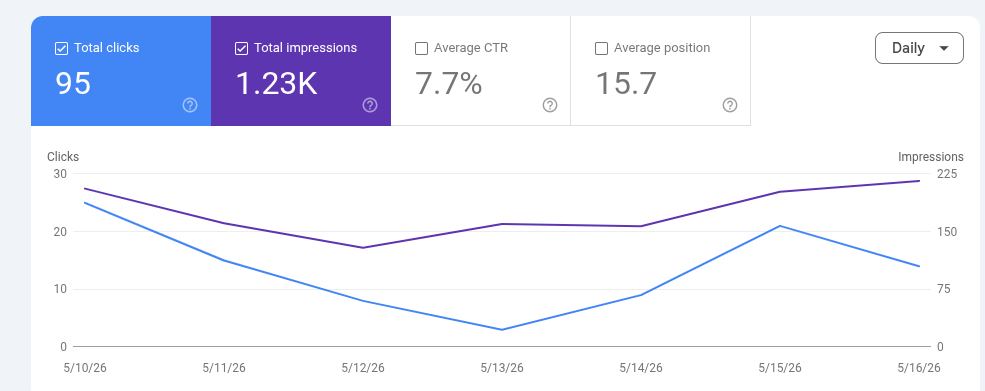
These free tools remain the foundation of blog analytics in 2026. Google Analytics provides comprehensive traffic data, while Search Console offers valuable insights into your search performance and technical SEO health.
Set up custom dashboards to track your most important blog metrics to track in one place, saving you time and providing quick insights at a glance.
BlogHunter: Your Automated Analytics Solution
Managing multiple metrics across different platforms can be overwhelming, especially for busy bloggers and content creators. This is where BlogHunter comes in as a game-changing solution for 2026.
BlogHunter automates the process of tracking your essential blog metrics, providing you with:
- Real-time performance dashboards
- Automated reporting and insights
- Cross-platform metric consolidation
- Trend analysis and recommendations
- Custom alerts for significant changes
Instead of spending hours manually checking different analytics platforms, BlogHunter brings all your crucial blog metrics to track into one intuitive interface, helping you make data-driven decisions faster and more effectively.
Creating Your Metrics Dashboard
Weekly Metrics to Monitor
Establish a weekly routine for checking your most important metrics. This includes:
- Traffic overview (total visitors, page views)
- Top-performing content
- Conversion rates
- Social media engagement
Monthly Deep Dive
Once a month, dive deeper into your analytics with a comprehensive review:
- Traffic source analysis
- SEO performance review
- Subscriber growth analysis
- Content performance trends
Using Metrics to Improve Your Content Strategy
Content Optimization Based on Data
Use your tracked metrics to inform your content strategy. If certain topics consistently perform well, create more content in those areas. If specific formats (like how-to guides or list posts) drive more engagement, adjust your content calendar accordingly.
Look for patterns in your top-performing content:
- Common topics or themes
- Similar content structures or formats
- Consistent publishing times or days
- Similar promotional strategies
A/B Testing for Continuous Improvement
Use your metrics to run A/B tests on various elements of your blog:
- Headline variations
- Call-to-action button colors and text
- Content length and format
- Publishing times
- Newsletter subject lines
Small improvements in conversion rates can lead to significant growth over time, making A/B testing a valuable practice for serious bloggers.
Common Metrics Mistakes to Avoid
Vanity Metrics Trap
Don't get caught up in vanity metrics that look impressive but don't drive real business results. While high page views are nice, they don't necessarily translate to success if those visitors aren't engaging with your content or taking desired actions.
Focus on metrics that directly impact your blog's goals, whether that's email subscribers, product sales, or brand partnerships.
Inconsistent Tracking
Establish consistent tracking practices and stick to them. Sporadic monitoring makes it difficult to identify real trends and can lead to misguided decisions based on incomplete data.
Use tools like BlogHunter to maintain consistent tracking and receive regular insights without the manual effort.
Future Trends in Blog Analytics
AI-Powered Insights
In 2026, AI is increasingly being integrated into analytics platforms, providing predictive insights and automated recommendations. These tools can identify patterns humans might miss and suggest content optimizations based on emerging trends.
Privacy-First Analytics
With continued focus on user privacy, expect to see more privacy-first analytics solutions that provide valuable insights while respecting user data. This includes cookieless tracking methods and first-party data strategies.
Conclusion: Your Metrics Journey
Tracking the right blog metrics to track is essential for growing your blog and achieving your content goals in 2026. Start with the basics we've covered—traffic, engagement, conversions, SEO, and social media metrics—and gradually expand your analytics practice as you become more comfortable with data-driven decision making.
Remember that metrics are tools to help you improve, not goals in themselves. The ultimate aim is creating valuable content that resonates with your audience and achieves your blogging objectives.
Ready to take your blog analytics to the next level? Try BlogHunter today and discover how automated tracking can transform your content strategy. With BlogHunter, you'll spend less time crunching numbers and more time creating the content your audience loves.
Start your free trial of BlogHunter now and join thousands of successful bloggers who are already using data to drive their content success in 2026.
Grow organic traffic on auto-pilot
BlogHunter researches keywords, writes SEO posts, and publishes to your site automatically. No writers. No CMS. No manual work.
Publish Now